| MOQ: | 1 |
| Price: | USD8000-USD15000/SET |
| Standard Packaging: | With regular Film and Carton |
| Delivery Period: | 15 DAYS After Deposit |
| Payment Method: | T/T |
| Supply Capacity: | 30SET/MONTH |
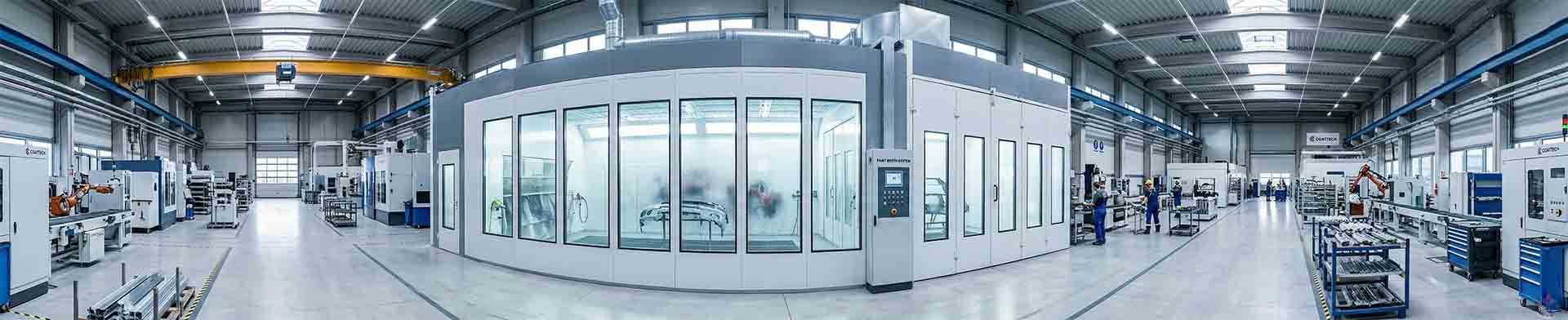
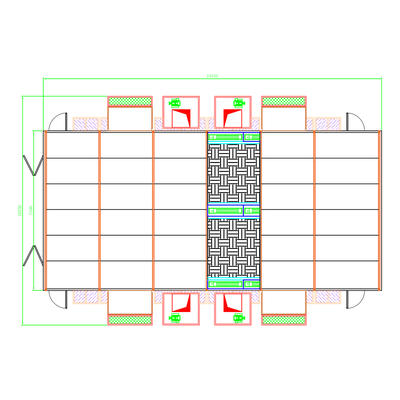
The KT-PQ-III-PLUS is a spray and bake booth built for 12 m carbon-fibre boat hulls, decks and components. It takes a complete hull on its transport cradle, gives it a clean, dust-free environment for two-component polyurethane primers, topcoats and clear coats, and then bakes the finish at 60 °C. With an internal working envelope of 15,000 × 7,000 × 4,000 mm, it handles a 12 m hull with room for operators on both sides.
|
Parameter |
Value |
Parameter |
Value |
|
Internal dimensions |
15,000 × 7,000 × 4,000 mm |
External dimensions |
15,153 × 10,250 × 4,600 mm |
|
Total supply air volume |
112,000 m³/h (4 × 28,000) |
Air speed, no load |
0.30 m/s |
|
Airflow pattern |
Side-downdraft, raised side plenums, no floor pit |
Heating capacity |
264 kW electric (4 × 66 kW) |
|
Heating zones |
4, independently controlled |
Bake cycle |
60 °C, held 30–45 min |
|
Heat-up time to 60 °C |
10–15 minutes |
Intake filtration |
G4 pre-filter + F5 ceiling |
|
Exhaust filtration |
Two-stage glass-fibre paint-stop + activated carbon |
Lighting |
188 × 18 W T8 LED, ≥ 1,000 lux, CRI ≥ 90 |
|
Control |
PLC with touchscreen |
Power supply |
415 V, 3 ph, 50 Hz |
|
Connected load |
68 kW spraying / 280 kW baking |
Peak connected load |
280 kW |
![]()
A carbon-fibre hull is not painted to hide it. On most modern boats the fibre is the finish, or the gloss clear coat over it is. That changes what the booth has to do.
· Surface quality is the product. Dust, fibre lint or overspray landing on wet clear coat cannot be polished out without losing gloss. Full-ceiling F5 filtration and 0.30 m/s downdraft keep the air clean across the whole envelope.
· The workpiece is long, not tall. A 12 m hull on a cradle is 2 m high but needs 15 m of clear length. Side-downdraft with raised side plenums delivers the required velocity without excavating a floor pit — a major saving on civil work.
· Bake temperature has a ceiling. Prepreg resin systems have a glass transition temperature. Baking above it will distort the hull. Four independent zones let you bake a small part without heating the whole booth, and every setpoint stays adjustable.
· Two-component polyurethane is moisture-sensitive. Its hardener reacts with water and releases CO₂, which shows up as blushing and pinholes. Where the booth stands in a humid coastal hall, dehumidification matters as much as cooling.
· Operators must reach the hull sides and the bow flare. Two pneumatic 3D trolleys on side-wall rails put people exactly where the geometry is hardest, without ladders inside the booth.
Four supply cabinets and four exhaust cabinets serve the booth, one set per zone. Each supply cabinet uses two external-rotor double-inlet centrifugal fans (BTAE-450H, 4 kW each) and each exhaust cabinet a single double-inlet fan (BTAE-560H, 11 kW). Every motor runs on its own ABB variable frequency drive, so air volume can be trimmed to the work in hand rather than running flat out all day.
A Belimo electric modulating damper switches the booth between spray and bake. In spray mode the booth runs on 100 % fresh air, as it must. In bake mode it recirculates up to 70 % of the air, which is what makes all-electric heating practical at this size: the heaters only have to lift the recirculated air the last few degrees instead of heating 112,000 m³/h of fresh air from ambient every minute.
Heating is entirely electric — no gas, no diesel. Each of the four units carries 21 stainless-steel element tubes of 3 kW, giving 66 kW per zone and 264 kW installed. The PLC energises only the zones you select, so a single component can be baked without bringing the whole booth to temperature. From 20 °C the booth reaches 60 °C in 10 to 15 minutes and holds there for the 30 to 45 minutes the coating needs.
![]()
Intake air passes a G4 bag pre-filter and then F5 full-depth adhesive ceiling media. Exhaust passes two stages of glass-fibre paint-stop — the first in the side collection plenums, the second at the base of the exhaust cabinets — and then a honeycomb bed of activated carbon brick (100 × 100 × 100 mm, iodine value ≥ 650) that adsorbs benzene and xylene before the air leaves the building. Annual carbon replacement is about 12.2 m³ across the four units.
188 T8 LED tubes of 18 W sit in IP65 light boxes: three ceiling rows (108 tubes) and two side-wall rows (80 tubes) on both long walls. Output exceeds 1,000 lux with a colour rendering index of 90 or better at 5,000–6,000 K. The side rows are what make the lower hull sides and the bow flare visible — areas that ceiling lighting alone always leaves in shadow.
A PLC with touchscreen runs preset spray, flash-off and bake programmes, all adjustable. Motors are protected by ABB drives; wiring in the hazardous zones runs in steel conduit to Ex junction boxes; the whole system is bonded to a single equipotential earth of no more than 4 Ω. Explosion-proof motors and lights are fitted throughout the hazardous zones. Fire suppression is by cabinet-type HFC-227ea, three 150 L cabinets carrying 387 kg of agent, with Ex smoke and heat detectors.
|
Option |
Description |
|
Pneumatic 3D trolleys |
Two trolleys on side-wall rails, for hull sides and bow flare |
|
Paint mixing room |
Model KT-TQ-I, 4,000 × 3,000 × 2,500 mm, to the same safety standard |
|
Fire suppression |
Cabinet-type HFC-227ea automatic system |
|
Air make-up cooling |
Available where the booth cannot stand in an air-conditioned hall |
|
Installation |
Engineer supervision or full mechanical and electrical erection |
|
Spare parts |
Two-year filter and lamp packages |
![]()
|
Question |
Answer |
|
Can the booth take hulls longer than 12 m? |
Yes. Dimensions are built to order. The 15,000 mm clear length shown here suits a 12 m hull on its cradle with working room at both ends; longer hulls simply need a longer booth and additional zones. |
|
What power supply does it need? |
415 V, three-phase, 50 Hz. Peak connected load is 280 kW, which occurs during bake. Spraying draws about 68 kW. |
|
Is cooling included? |
Not as standard. Where the booth stands inside an air-conditioned hall, cooling is not needed. Where it does not, we add air make-up cooling sized to your outdoor design condition. |
|
How long does installation take? |
For this size, three to four skilled workers can complete erection within about 15 days, with one of our engineers supervising. |
|
Which explosion-protection standard do you build to? |
We supply to ATEX, IECEx or national explosion-proof standards depending on your market and inspection requirements. The booth construction itself follows EN 16985. |
Call to Action
Get Best Price
Send us your workpiece dimensions, weight, coating specification and available floor area. Our engineering team will size the booth and return a configured proposal.
![]()
![]()
![]()
| MOQ: | 1 |
| Price: | USD8000-USD15000/SET |
| Standard Packaging: | With regular Film and Carton |
| Delivery Period: | 15 DAYS After Deposit |
| Payment Method: | T/T |
| Supply Capacity: | 30SET/MONTH |
The KT-PQ-III-PLUS is a spray and bake booth built for 12 m carbon-fibre boat hulls, decks and components. It takes a complete hull on its transport cradle, gives it a clean, dust-free environment for two-component polyurethane primers, topcoats and clear coats, and then bakes the finish at 60 °C. With an internal working envelope of 15,000 × 7,000 × 4,000 mm, it handles a 12 m hull with room for operators on both sides.
|
Parameter |
Value |
Parameter |
Value |
|
Internal dimensions |
15,000 × 7,000 × 4,000 mm |
External dimensions |
15,153 × 10,250 × 4,600 mm |
|
Total supply air volume |
112,000 m³/h (4 × 28,000) |
Air speed, no load |
0.30 m/s |
|
Airflow pattern |
Side-downdraft, raised side plenums, no floor pit |
Heating capacity |
264 kW electric (4 × 66 kW) |
|
Heating zones |
4, independently controlled |
Bake cycle |
60 °C, held 30–45 min |
|
Heat-up time to 60 °C |
10–15 minutes |
Intake filtration |
G4 pre-filter + F5 ceiling |
|
Exhaust filtration |
Two-stage glass-fibre paint-stop + activated carbon |
Lighting |
188 × 18 W T8 LED, ≥ 1,000 lux, CRI ≥ 90 |
|
Control |
PLC with touchscreen |
Power supply |
415 V, 3 ph, 50 Hz |
|
Connected load |
68 kW spraying / 280 kW baking |
Peak connected load |
280 kW |
![]()
A carbon-fibre hull is not painted to hide it. On most modern boats the fibre is the finish, or the gloss clear coat over it is. That changes what the booth has to do.
· Surface quality is the product. Dust, fibre lint or overspray landing on wet clear coat cannot be polished out without losing gloss. Full-ceiling F5 filtration and 0.30 m/s downdraft keep the air clean across the whole envelope.
· The workpiece is long, not tall. A 12 m hull on a cradle is 2 m high but needs 15 m of clear length. Side-downdraft with raised side plenums delivers the required velocity without excavating a floor pit — a major saving on civil work.
· Bake temperature has a ceiling. Prepreg resin systems have a glass transition temperature. Baking above it will distort the hull. Four independent zones let you bake a small part without heating the whole booth, and every setpoint stays adjustable.
· Two-component polyurethane is moisture-sensitive. Its hardener reacts with water and releases CO₂, which shows up as blushing and pinholes. Where the booth stands in a humid coastal hall, dehumidification matters as much as cooling.
· Operators must reach the hull sides and the bow flare. Two pneumatic 3D trolleys on side-wall rails put people exactly where the geometry is hardest, without ladders inside the booth.
Four supply cabinets and four exhaust cabinets serve the booth, one set per zone. Each supply cabinet uses two external-rotor double-inlet centrifugal fans (BTAE-450H, 4 kW each) and each exhaust cabinet a single double-inlet fan (BTAE-560H, 11 kW). Every motor runs on its own ABB variable frequency drive, so air volume can be trimmed to the work in hand rather than running flat out all day.
A Belimo electric modulating damper switches the booth between spray and bake. In spray mode the booth runs on 100 % fresh air, as it must. In bake mode it recirculates up to 70 % of the air, which is what makes all-electric heating practical at this size: the heaters only have to lift the recirculated air the last few degrees instead of heating 112,000 m³/h of fresh air from ambient every minute.
Heating is entirely electric — no gas, no diesel. Each of the four units carries 21 stainless-steel element tubes of 3 kW, giving 66 kW per zone and 264 kW installed. The PLC energises only the zones you select, so a single component can be baked without bringing the whole booth to temperature. From 20 °C the booth reaches 60 °C in 10 to 15 minutes and holds there for the 30 to 45 minutes the coating needs.
![]()
Intake air passes a G4 bag pre-filter and then F5 full-depth adhesive ceiling media. Exhaust passes two stages of glass-fibre paint-stop — the first in the side collection plenums, the second at the base of the exhaust cabinets — and then a honeycomb bed of activated carbon brick (100 × 100 × 100 mm, iodine value ≥ 650) that adsorbs benzene and xylene before the air leaves the building. Annual carbon replacement is about 12.2 m³ across the four units.
188 T8 LED tubes of 18 W sit in IP65 light boxes: three ceiling rows (108 tubes) and two side-wall rows (80 tubes) on both long walls. Output exceeds 1,000 lux with a colour rendering index of 90 or better at 5,000–6,000 K. The side rows are what make the lower hull sides and the bow flare visible — areas that ceiling lighting alone always leaves in shadow.
A PLC with touchscreen runs preset spray, flash-off and bake programmes, all adjustable. Motors are protected by ABB drives; wiring in the hazardous zones runs in steel conduit to Ex junction boxes; the whole system is bonded to a single equipotential earth of no more than 4 Ω. Explosion-proof motors and lights are fitted throughout the hazardous zones. Fire suppression is by cabinet-type HFC-227ea, three 150 L cabinets carrying 387 kg of agent, with Ex smoke and heat detectors.
|
Option |
Description |
|
Pneumatic 3D trolleys |
Two trolleys on side-wall rails, for hull sides and bow flare |
|
Paint mixing room |
Model KT-TQ-I, 4,000 × 3,000 × 2,500 mm, to the same safety standard |
|
Fire suppression |
Cabinet-type HFC-227ea automatic system |
|
Air make-up cooling |
Available where the booth cannot stand in an air-conditioned hall |
|
Installation |
Engineer supervision or full mechanical and electrical erection |
|
Spare parts |
Two-year filter and lamp packages |
![]()
|
Question |
Answer |
|
Can the booth take hulls longer than 12 m? |
Yes. Dimensions are built to order. The 15,000 mm clear length shown here suits a 12 m hull on its cradle with working room at both ends; longer hulls simply need a longer booth and additional zones. |
|
What power supply does it need? |
415 V, three-phase, 50 Hz. Peak connected load is 280 kW, which occurs during bake. Spraying draws about 68 kW. |
|
Is cooling included? |
Not as standard. Where the booth stands inside an air-conditioned hall, cooling is not needed. Where it does not, we add air make-up cooling sized to your outdoor design condition. |
|
How long does installation take? |
For this size, three to four skilled workers can complete erection within about 15 days, with one of our engineers supervising. |
|
Which explosion-protection standard do you build to? |
We supply to ATEX, IECEx or national explosion-proof standards depending on your market and inspection requirements. The booth construction itself follows EN 16985. |
Call to Action
Get Best Price
Send us your workpiece dimensions, weight, coating specification and available floor area. Our engineering team will size the booth and return a configured proposal.
![]()
![]()
![]()