Filter Consumables

Filter
February 25, 2025
Category Connection: Filter Consumables
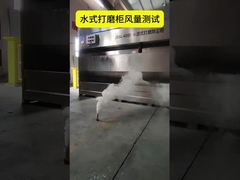
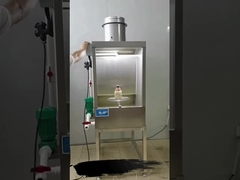
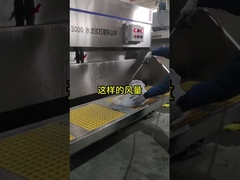
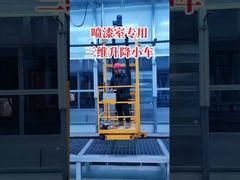
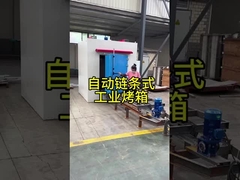
Brief: Need quick answers about practical use? This video highlights the essentials. Watch as we demonstrate how the Heated Industrial Air Makeup Unit (AMU) works to replace exhausted air and maintain positive booth pressure in spray booth operations. You'll see the unit's filtration process, heating mechanism, and how it integrates with booth controls to prevent negative pressure and dust contamination.
Related Product Features:
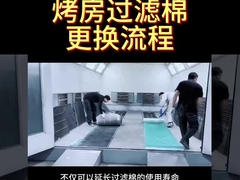
  • Composed of high-strength continuous monofilament glass fibers with a progressively layered structure for high capture efficiency.
  • Excellent compressibility maintains shape integrity with filtering fibers optimized for retaining paint mist and dust.
  • Features green and white filter material where green indicates the air intake surface and white faces outward.
  • Provides elasticity with minimal pressure loss and outstanding capture efficiency for dense paint mist (G3/G4 efficiency).
  • Compliant with DIN 4102 F1 flame-retardant standards for safe operation.
  • Strong moisture resistance capable of withstanding 100% relative humidity.
  • High-temperature resistance up to 170°C for demanding industrial environments.
  • Available in rolls or pre-cut sheets to suit various installation requirements.
FAQs:
  • What is the purpose of the Heated Industrial Air Makeup Unit (AMU)?
    The AMU is crucial for spray booth operations as it replaces the huge volumes of exhausted air. It draws in fresh outside air, filters it, heats it to spraying temperature, and forces it into the facility to maintain positive pressure, preventing the building from entering negative pressure which would suck in dust from outside.
  • What are the key specifications for temperature and airflow?
    The unit uses a direct fired gas burner with 92%+ efficiency for heating and offers custom air volume (CFM) sizing to match exhaust requirements, typically ranging from 10,000 to 50,000 CFM. It maintains precise temperature control through a modulating burner and operates with air velocities between 0.7-1.75 m/s depending on the model.
  • How is the filter media constructed and what standards does it meet?
    The filter media is made from high-strength continuous monofilament glass fibers with a progressive layered structure. It offers G3/G4 filtration efficiency, is compliant with DIN 4102 F1 flame-retardant standards, and can withstand temperatures up to 170°C and 100% relative humidity while maintaining excellent dust holding capacity.