| MOQ: | 1 |
| Price: | USD2000-USD10000/SET |
| Standard Packaging: | With regular Film and Carton |
| Delivery Period: | 15 DAYS After Deposit |
| Payment Method: | T/T |
| Supply Capacity: | 500SET/MONTH |
|
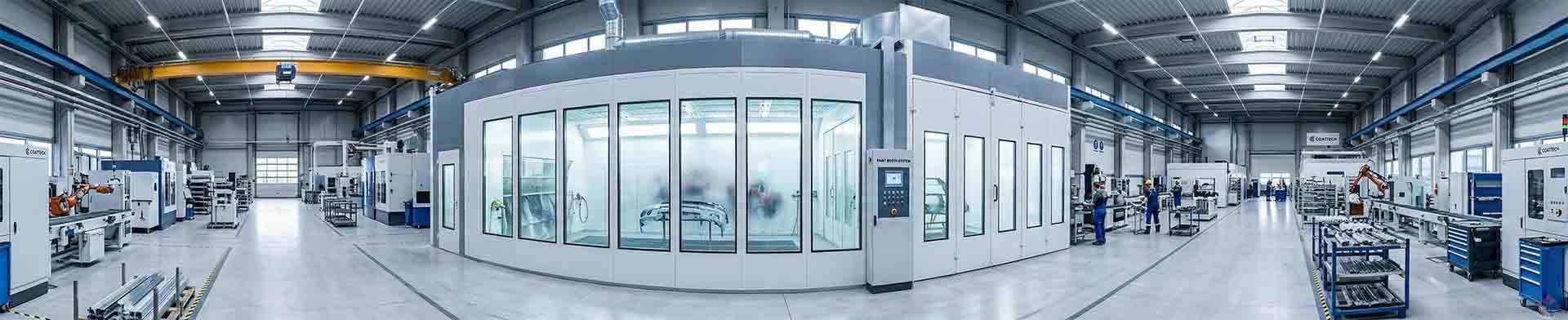
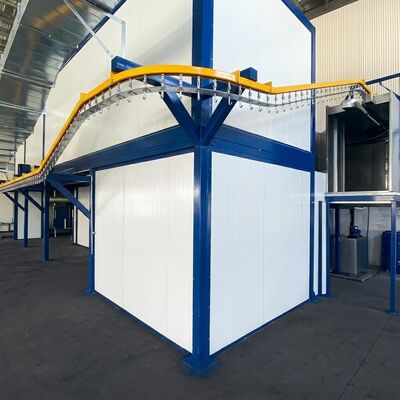
Fully Automated Electrophoretic Coating (E-Coat) Line Continuous cathodic E-coat for automotive chassis components — 72 m overhead conveyor line, | Location: P*****d, Central Europe | Client name withheld under NDA |
|
|
PROJECT AT A GLANCE
|
Item |
Detail |
|
Client |
Tier-2 manufacturer of automotive chassis and suspension components (stampings and welded assemblies) |
|
Workpieces |
Control arms, spring seats, subframe brackets, cross-member reinforcements, seat-frame stampings |
|
Substrate |
Cold-rolled steel, hot-rolled pickled steel, some zinc-coated brackets |
|
Max. workpiece envelope |
1,200 × 800 × 600 mm · max. 45 kg per hanger |
|
Process |
7-stage immersion pre-treatment → cathodic electrophoretic deposition (CED) → 3-stage UF counterflow rinse → DI rinse → drain + air blow-off → gas-fired convection cure |
|
Line configuration |
Single-loop overhead chain conveyor, continuous, fully automatic, load/unload only manual |
|
Conveyor path / footprint |
72 m process path · 72 m × 11 m installed footprint |
|
Chain speed |
0.4 – 2.0 m/min (VFD, stepless), nominal 1.2 m/min · hanger pitch 400 mm |
|
Design throughput |
180 pcs/h · 2,880 pcs/day (2 shifts) · 720,000 pcs/year (250 working days) |
|
Dry film thickness |
20 ± 3 μm (measured mean 20.3 μm, range 18.4 – 22.1 μm) |
|
Cure schedule |
Metal temperature 175 ± 5 °C for 25 min (3-zone gas convection oven, 900,000 kcal/h) |
|
ED tank |
30 m³ working volume, cathodic epoxy dispersion, 316L tubular diaphragm anodes |
|
Utilities |
Installed power 480 kW · natural gas 900,000 kcal/h · DI water 2 m³/h · compressed air 6 bar |
|
Manning |
2 operators per shift (load / unload) + 1 process technician per day |
|
CoatTech scope |
Process design, manufacture, FAT, shipment, installation, commissioning, operator training, 12-month process support |
|
Project timeline |
Contract Nov 2025 → engineering 4 wks → fabrication 10 wks → FAT 1 wk → installation 6 wks → commissioning 3 wks → SOP Mar 2026 |
|
01 THE CHALLENGE |
The client supplied control arms, spring seats and subframe brackets to two European OEM assembly plants. All parts were finished on a manual air-spray line with a solvent-borne two-component primer: six sprayers per shift, two shifts a day. The line had become the constraint on the whole plant, and — more seriously — the source of a recurring quality dispute with its customers.
Five problems had to be solved at the same time:
· Cavities and weld seams were not being coated. Air spray cannot reach inside box sections, hem flanges or the back of weld beads. Salt-spray panels cut from finished parts rusted at 240 h against an OEM specification of 720 h.
· Film thickness scatter. Measured dry film ran 25 – 70 μm depending on operator and part geometry; heavy areas sagged, shadowed areas were starving. Consumption of primer was therefore far higher than the theoretical requirement.
· Capacity ceiling. The manual line delivered 110 pcs/h against a firm customer requirement of 180 pcs/h for the 2026 model year. Overtime and weekend shifts were already running.
· Yield. First-pass yield sat at 90.2%; 9.8% of parts needed rework and 2.1% were scrapped outright, mostly for runs, dry spray and misses.
· Environmental permit. Solvent use put the site at 42.6 t/a of VOC against a permit ceiling that would drop to 5 t/a at the next renewal. There was no credible path to compliance with solvent-borne spray.
Measured baseline before the project
|
Metric |
Manual air spray (baseline) |
OEM / permit requirement |
|
Throughput |
110 pcs/h |
180 pcs/h |
|
First-pass yield |
90.2 % |
≥ 98 % |
|
Scrap rate |
2.1 % |
≤ 0.5 % |
|
Dry film thickness |
25 – 70 μm (± 22 μm spread) |
18 – 25 μm |
|
Cavity / weld coverage |
Inconsistent; bare metal in box sections |
100 % coverage |
|
Neutral salt spray |
240 h (red rust at welds) |
≥ 720 h |
|
Paint utilisation |
≈ 45 % |
— |
|
VOC emissions |
42.6 t/a |
≤ 5 t/a |
|
Direct operators |
12 (6 per shift × 2 shifts) |
— |
|
Unit coating cost |
€ 1.85 / pc |
— |
|
02 WHY CATHODIC E-COAT AND NOT ANOTHER SPRAY LINE |
CoatTech evaluated three routes against the client's five requirements — cavity coverage, thickness control, capacity, VOC and unit cost. Only electrophoretic deposition satisfies all of them at once, because deposition is driven by an electric field rather than by line of sight.
|
Requirement |
Air / airless liquid spray |
Electrostatic powder |
Cathodic E-coat (selected) |
|
Cavity & weld coverage |
Poor — line-of-sight only |
Poor — Faraday cage effect |
Excellent — field-driven, 21 cm Ford-box throwing power |
|
Thickness uniformity |
± 22 μm observed |
± 8 – 15 μm typical |
± 2 μm across the whole part |
|
Edge coverage |
Thins at edges |
Thins at edges |
Edges coat first — field concentrates there |
|
Automation & capacity |
Operator-limited |
Good |
Excellent — continuous conveyor, 180 pcs/h |
|
VOC |
42.6 t/a (solvent-borne) |
Near zero, but overspray waste |
< 5 t/a — waterborne, low co-solvent |
|
Corrosion performance |
240 h |
500 – 700 h on edges |
1,008 h verified |
|
Material utilisation |
≈ 45 % |
≈ 95 % with recovery |
96.5 % with UF closed-loop recovery |
|
Unit cost |
€ 1.85 / pc |
Higher film build cost |
€ 1.15 / pc |
|
Decision: a continuous cathodic electrophoretic line. Cathodic (not anodic) deposition was specified because the workpiece is the cathode — the substrate is not attacked, no metal ions dissolve into the bath, and corrosion performance is typically two to three times that of anodic systems on the same film build. |
|
03 THE SOLUTION |
3.1 Process flow — 13 stations, 72 m of conveyor
|
Stn |
Station |
Method |
Key parameter |
Function |
|
1 |
Pre-degrease |
Immersion |
Alkali 5 – 7 %, 55 – 60 °C, 3 min |
Removes bulk press oil and handling soil before the main bath |
|
2 |
Main degrease |
Immersion + circulation |
Alkali 5 – 7 %, 55 – 60 °C, 6 min |
Complete removal of drawing compound and weld anti-spatter |
|
3 |
Rinse 1 |
Immersion, overflowing |
Tap water, ambient, 1 min |
Strips carry-over degreaser |
|
4 |
Surface conditioning |
Immersion |
Titanium phosphate colloid, ambient, 1 min |
Creates dense nucleation sites so the phosphate film is fine and even |
|
5 |
Phosphating |
Immersion |
Zinc phosphate, 40 – 45 °C, 8 min, 2.5 – 4.0 g/m² |
Grows the conversion layer that carries adhesion and under-film corrosion resistance |
|
6 |
Rinse 2 |
Immersion, overflowing |
Tap water, ambient, 1 min |
Removes phosphate liquor |
|
7 |
DI rinse |
Immersion + spray |
Deionised water, ambient, 1 min, < 25 μS/cm |
Last barrier — stops salts and phosphate entering the ED bath |
|
8 |
Drain |
Free drain over bath |
2 min |
Reduces drag-in dilution of the ED bath |
|
9 |
Cathodic E-coat |
Full immersion, DC field |
30 m³, 28 ± 1 °C, solids 19 ± 1 %, pH 6.0 – 6.7, 1,300 ± 300 μS/cm, 180 – 220 V ramped, 150 s |
Deposits a 20 μm wet film with full cavity coverage |
|
10 – 12 |
UF rinse (3 stages) |
Spray + immersion, counterflow |
UF permeate, ambient, 30 s per stage |
Recovers un-deposited paint to the ED bath, removes loose film; permeate cascades back stage by stage |
|
13 |
DI rinse |
Spray, fresh |
Deionised water, 30 s |
Removes UF liquor so the cured film is free of water spotting |
|
14 |
Drain + air blow-off |
Air knives |
2 min |
Clears pockets and blind holes — prevents boil-out craters in the oven |
|
15 |
Cure oven |
Gas convection, 3 zones |
Metal temperature 175 ± 5 °C, 25 min |
Cross-links the film to its final mechanical and chemical resistance |
3.2 Key subsystems that make the process stable
· Anode membrane system — tubular diaphragm anodes in 316L stainless separate the anodes and anolyte from the bath. It isolates dissolving metal and removes the acid generated by electrolysis, which is what keeps bath pH from drifting down. Anolyte conductivity is held at 400 ± 100 μS/cm.
· Bath temperature control — deposition is exothermic and the bath is circulated continuously. A plate heat exchanger coupled to a 120 kW chiller holds 28 ± 1 °C; the UF loop is cooled on the same circuit so permeate never exceeds 33 °C and the membrane does not age prematurely.
· Ultrafiltration — four spiral-wound modules produce 1.8 m³/h of permeate. Permeate is the rinse medium for stations 10 – 12 and returns the recovered paint to the ED tank, which is what lifts utilisation to 96.5 % and makes the rinse section a closed loop.
· Filtration — 50 μm bag filters followed by 25 μm cartridges on the main circulation; filters are changed on differential pressure, not on a calendar.
· Rectifier — 400 A / 300 V DC with less than 5 % ripple and soft-start voltage ramping. Ramping the voltage rather than applying it in one step is what prevents pinholing on complex stampings.
· Deionised water plant — RO + EDI at 2 m³/h, product conductivity below 10 μS/cm, feeding the final rinse and bath make-up.
· Control — S7-1500 PLC with a 15-inch HMI. Recipe management per part family, live trending of bath temperature, pH, conductivity, rectifier volts/amps, chain speed and all oven zones, plus batch traceability and alarm history to SCADA.
3.3 Equipment scope of supply
|
Package |
Supply |
|
Pre-treatment |
7 immersion tanks in PP / SUS304, 28 m³ total, steam-heated with automatic temperature control, oil skimmer on degrease tanks, sludge screw press for phosphate |
|
E-coat section |
30 m³ ED tank with overflow weir, circulation pumps, plate heat exchanger, 316L tubular diaphragm anodes with anolyte loop, 400 A / 300 V rectifier |
|
Rinse & recovery |
3-stage UF counterflow rinse, 4 spiral-wound UF modules (1.8 m³/h permeate), fresh DI spray station, air-knife blow-off |
|
Cure oven |
30 m gas-fired convection oven, 900,000 kcal/h, 3 independently controlled zones, 150 mm insulated panels, forced air circulation, heat recovery to pre-treatment make-up |
|
Conveyor |
Heavy-duty overhead chain conveyor, 72 m, 45 kg per hanger, VFD 0.4 – 2.0 m/min, automatic lubrication, overload and jam protection |
|
Utilities & environment |
RO + EDI water plant (2 m³/h), bag and cartridge filtration, exhaust collection from tanks and oven with VOC abatement, drip trays and bunded chemical storage |
|
Control & safety |
S7-1500 PLC, 15" HMI, SCADA data logging, recipe management, CE-compliant guarding, emergency stop circuits, gas leak detection and burner flame safeguard |
|
Services |
Process design and tank sizing, manufacture, FAT at CoatTech Guangzhou, shipment, site installation, commissioning, operator and laboratory training, 12 months of process support |
|
04 PROCESS CONTROL WINDOWS AS AGREED IN THE SPECIFICATION |
The line is run against the following windows. Values are logged per shift and are the contractual acceptance criteria, not averages of convenience.
|
Parameter |
Unit |
Target window |
Check frequency |
Why it matters |
|
Bath solids (105 °C, 1 h) |
% |
19 ± 1 |
Every 2 days |
Too low → thin film and poor hiding; too high → poor flow and rough film |
|
Bath pH (25 °C) |
— |
6.0 – 6.7 |
Daily |
Low → violent electrolysis and pinholes; high → resin flocculation and poor throwing power |
|
Bath conductivity |
μS/cm |
1,300 ± 300 |
Daily |
High → rough film and pinholes; low → low throwing power and insufficient build |
|
Bath temperature |
°C |
28 ± 1 |
Continuous |
Every 1 °C up raises deposition 8 – 12 % and shortens bath life |
|
Anolyte conductivity |
μS/cm |
400 ± 100 |
Daily |
Tracks acid removal; rising value means diaphragm fouling |
|
MEQ (neutralisation equivalent) |
— |
Per paint supplier |
Weekly |
Drift signals bath ageing or contamination |
|
Solvent content |
% |
< 3.5 |
Weekly |
Low → orange peel and poor flow; high → abnormal build and higher VOC |
|
Ash / pigment-to-binder ratio |
% |
21 ± 3 |
Weekly |
Controls film appearance and corrosion balance |
|
Deposition voltage |
V DC |
180 – 220, ramped |
Per recipe |
Ramping avoids pinholes on complex stampings |
|
Deposition time |
s |
150 |
Per recipe |
Sets film build together with voltage and bath temperature |
|
Phosphate coating weight |
g/m² |
2.5 – 4.0 |
Weekly |
Below range → adhesion and salt-spray loss; above → rough film |
|
Final rinse conductivity |
μS/cm |
< 25 |
Daily |
The main defence against salt contamination of the bath |
|
Oven metal temperature |
°C |
175 ± 5 |
2 × daily + furnace tracker monthly |
Under-cure → low gel fraction; over-cure → discoloration and brittleness |
|
Dry film thickness |
μm |
20 ± 3 |
Every batch |
Contractual and cost driver simultaneously |
|
05 PROJECT EXECUTION |
|
Phase |
Duration |
Milestone |
|
Process design |
4 weeks |
Bath and tank sizing from real throughput, heat balance and oven profile signed off by client and paint supplier |
|
Fabrication |
10 weeks |
Tanks, oven, conveyor and control cabinets built and pre-assembled at CoatTech, Foshan / Guangzhou |
|
FAT |
1 week |
Dry run of the full line at our works: conveyor, rectifier, burners, PLC logic and interlocks witnessed and signed off |
|
Shipment & installation |
6 weeks |
11 × 40 ft containers; mechanical and electrical erection on the client's prepared foundation |
|
Commissioning |
3 weeks |
Bath make-up and maturation, rectifier ramp trials, oven profiling with a Datapaq tracker, first articles |
|
Validation |
2 weeks |
Salt-spray, cross-cut, impact, thickness and throwing-power testing against the acceptance protocol |
|
Training & handover |
1 week |
Operators, laboratory and maintenance trained; bath control sheets and SPC templates handed over |
|
06 RESULTS — BEFORE AND AFTER |
Figures below were recorded during commissioning and the first six months of series production (March – September 2026) and are taken from the client's own SPC records.
|
+64 % THROUGHPUT — 110 → 180 pcs/h |
99.1 % FIRST-PASS YIELD — was 90.2 % |
96.5 % PAINT UTILISATION — was ≈ 45 % |
|
1,008 h NEUTRAL SALT SPRAY — was 240 h |
−93 % VOC EMISSIONS — 42.6 → 3.1 t/a |
14 mo PAYBACK ON INVESTMENT |
|
Metric |
Before (manual spray) |
After (E-coat line) |
Change |
|
Throughput |
110 pcs/h |
180 pcs/h |
+64 % |
|
Annual capacity (2 shifts, 250 d) |
440,000 pcs |
720,000 pcs |
+64 % |
|
First-pass yield |
90.2 % |
99.1 % |
+8.9 pp |
|
Rework rate |
9.8 % |
0.9 % |
−91 % |
|
Scrap rate |
2.1 % |
0.25 % |
−88 % |
|
Film thickness spread |
± 22 μm |
± 2 μm |
−91 % |
|
Neutral salt spray |
240 h |
1,008 h (creepage ≤ 1.2 mm) |
+320 % |
|
Coverage in cavities / welds |
Partial, bare metal present |
Complete — 21 cm Ford-box throwing power |
Resolved |
|
Paint utilisation |
≈ 45 % |
96.5 % |
+114 % |
|
Paint per 1,000 pieces |
148 kg |
70 kg |
−53 % |
|
VOC emissions |
42.6 t/a |
3.1 t/a |
−93 % |
|
Direct operators |
12 (6 per shift) |
4 (2 per shift) |
−67 % |
|
Labour per 1,000 pieces |
109 man-hours |
22 man-hours |
−80 % |
|
Energy per 1,000 pieces |
€ 310 |
€ 214 |
−31 % |
|
Unit coating cost |
€ 1.85 / pc |
€ 1.15 / pc |
−38 % |
|
Unplanned line stoppages |
4.2 h / week |
0.6 h / week |
−86 % |
|
Overall equipment effectiveness |
62 % |
89 % |
+27 pp |
|
07 VALIDATION AND TEST DATA |
Acceptance testing was carried out on production parts, not on laboratory panels, with the paint supplier present. Test methods follow the standards named in the client's OEM approval package.
|
Test item |
Method / standard |
Specification |
Result |
|
Dry film thickness |
Magnetic gauge, ISO 2808 |
18 – 25 μm |
Mean 20.3 μm; range 18.4 – 22.1 μm |
|
Throwing power |
Ford box method, HG/T 3334 |
≥ 18 cm (premium grade) |
21 cm |
|
Cross-cut adhesion |
ISO 2409, 1 mm spacing |
Class 0 |
Class 0 |
|
Neutral salt spray |
ISO 9227 / GB/T 10125 |
≥ 720 h |
1,008 h; single-sided creepage ≤ 1.2 mm, no blistering |
|
Impact resistance |
ISO 6272 |
≥ 50 kg·cm |
Pass at 50 kg·cm |
|
Pencil hardness |
ISO 15184 |
≥ 2H |
2H |
|
Cupping (Erichsen) |
ISO 1520 |
≥ 5 mm |
6.2 mm |
|
Gel fraction |
Solvent extraction |
≥ 90 % |
94.5 % |
|
Bath solids |
Gravimetric, 105 °C |
19 ± 1 % |
19.3 % |
|
Bath pH |
pH meter, 25 °C |
6.0 – 6.7 |
6.35 |
|
Bath conductivity |
Conductivity meter, 25 °C |
1,300 ± 300 μS/cm |
1,420 μS/cm |
|
Bath temperature |
Inline PT100, logged |
28 ± 1 °C |
28.4 °C, spread 0.6 °C over 24 h |
|
Cure — metal temperature |
Datapaq furnace tracker, 6 probes |
175 ± 5 °C × 20 min minimum |
176 °C held for 25 min; all probes within window |
|
Edge coverage |
Cross-section microscopy |
No thinning at edges |
Edge build equal to or above face build |
|
08 ENVIRONMENTAL AND ECONOMIC BENEFIT |
Environmental
· VOC cut from 42.6 t/a to 3.1 t/a — the site is now inside its permit ceiling with headroom, and the solvent-based primer store was decommissioned.
· The rinse section is a closed loop: UF permeate carries recovered paint back to the ED tank, so the only discharge is spent permeate and occasional filter backwash, both routed to the existing effluent plant.
· Oven exhaust heat is recovered to pre-treatment tank make-up water, which is where most of the 31 % energy saving comes from.
· Phosphate sludge is dewatered on a screw press before disposal, reducing hazardous waste volume by roughly 70 % compared with the previous wet sludge handling.
Economics
· Unit coating cost fell from € 1.85 to € 1.15 — driven by material recovery, not by cheaper paint.
· Direct labour on finishing dropped from 12 operators to 4; the released headcount was redeployed to assembly, so the saving was taken in full.
· Rework and scrap together fell by roughly 90 %, which removed two internal cost streams that had never been properly measured before.
· Combined annual saving of € 412,000 against an installed project cost of € 481,000 gives a simple payback of 14 months; the figures are before any revenue effect from the extra 280,000 parts of annual capacity.
|
The larger commercial effect was not the cost saving but the qualification: at 1,008 h salt spray the client now clears the OEM's 720 h requirement with margin, which removed the audit exception that had been blocking new part nominations. |
|
09 IN THE CLIENT'S WORDS |
|
“What surprised us was not the corrosion result — we expected that. It was the consistency. Our film thickness spread went from 22 microns to under 2, and first-pass yield has not dropped below 99 % in six months. We stopped talking about coating as a problem and started quoting it in tenders.” — Head of Manufacturing Engineering, Tier-2 chassis components supplier, P*****d |
|
10 WHY COATTECH |
· One supplier from process design to production support — the tank sizing, the bath control windows, the oven profile and the PLC recipes were engineered together, so no interface was left to the client to resolve.
· The complete line was dry-run at our works before shipment. FAT covered conveyor, rectifier, burners, PLC logic and safety interlocks, which is why on-site commissioning took three weeks instead of the usual two months.
· Bath control sheets, SPC templates and laboratory procedures were handed over with the line; the client's own team runs the bath, not ours.
· A process engineer stayed on site for the first month of production, with remote support for 12 months afterwards.
· Spare parts package, filter and membrane consumables, and a named service contact for the life of the line.
Youtube Video Link as follow
https://youtube.com/shorts/Ov19gypUkog?si=pVBIy_BJVYnRvs0n
![]()
![]()
|
|
| MOQ: | 1 |
| Price: | USD2000-USD10000/SET |
| Standard Packaging: | With regular Film and Carton |
| Delivery Period: | 15 DAYS After Deposit |
| Payment Method: | T/T |
| Supply Capacity: | 500SET/MONTH |
|
Fully Automated Electrophoretic Coating (E-Coat) Line Continuous cathodic E-coat for automotive chassis components — 72 m overhead conveyor line, | Location: P*****d, Central Europe | Client name withheld under NDA |
|
|
PROJECT AT A GLANCE
|
Item |
Detail |
|
Client |
Tier-2 manufacturer of automotive chassis and suspension components (stampings and welded assemblies) |
|
Workpieces |
Control arms, spring seats, subframe brackets, cross-member reinforcements, seat-frame stampings |
|
Substrate |
Cold-rolled steel, hot-rolled pickled steel, some zinc-coated brackets |
|
Max. workpiece envelope |
1,200 × 800 × 600 mm · max. 45 kg per hanger |
|
Process |
7-stage immersion pre-treatment → cathodic electrophoretic deposition (CED) → 3-stage UF counterflow rinse → DI rinse → drain + air blow-off → gas-fired convection cure |
|
Line configuration |
Single-loop overhead chain conveyor, continuous, fully automatic, load/unload only manual |
|
Conveyor path / footprint |
72 m process path · 72 m × 11 m installed footprint |
|
Chain speed |
0.4 – 2.0 m/min (VFD, stepless), nominal 1.2 m/min · hanger pitch 400 mm |
|
Design throughput |
180 pcs/h · 2,880 pcs/day (2 shifts) · 720,000 pcs/year (250 working days) |
|
Dry film thickness |
20 ± 3 μm (measured mean 20.3 μm, range 18.4 – 22.1 μm) |
|
Cure schedule |
Metal temperature 175 ± 5 °C for 25 min (3-zone gas convection oven, 900,000 kcal/h) |
|
ED tank |
30 m³ working volume, cathodic epoxy dispersion, 316L tubular diaphragm anodes |
|
Utilities |
Installed power 480 kW · natural gas 900,000 kcal/h · DI water 2 m³/h · compressed air 6 bar |
|
Manning |
2 operators per shift (load / unload) + 1 process technician per day |
|
CoatTech scope |
Process design, manufacture, FAT, shipment, installation, commissioning, operator training, 12-month process support |
|
Project timeline |
Contract Nov 2025 → engineering 4 wks → fabrication 10 wks → FAT 1 wk → installation 6 wks → commissioning 3 wks → SOP Mar 2026 |
|
01 THE CHALLENGE |
The client supplied control arms, spring seats and subframe brackets to two European OEM assembly plants. All parts were finished on a manual air-spray line with a solvent-borne two-component primer: six sprayers per shift, two shifts a day. The line had become the constraint on the whole plant, and — more seriously — the source of a recurring quality dispute with its customers.
Five problems had to be solved at the same time:
· Cavities and weld seams were not being coated. Air spray cannot reach inside box sections, hem flanges or the back of weld beads. Salt-spray panels cut from finished parts rusted at 240 h against an OEM specification of 720 h.
· Film thickness scatter. Measured dry film ran 25 – 70 μm depending on operator and part geometry; heavy areas sagged, shadowed areas were starving. Consumption of primer was therefore far higher than the theoretical requirement.
· Capacity ceiling. The manual line delivered 110 pcs/h against a firm customer requirement of 180 pcs/h for the 2026 model year. Overtime and weekend shifts were already running.
· Yield. First-pass yield sat at 90.2%; 9.8% of parts needed rework and 2.1% were scrapped outright, mostly for runs, dry spray and misses.
· Environmental permit. Solvent use put the site at 42.6 t/a of VOC against a permit ceiling that would drop to 5 t/a at the next renewal. There was no credible path to compliance with solvent-borne spray.
Measured baseline before the project
|
Metric |
Manual air spray (baseline) |
OEM / permit requirement |
|
Throughput |
110 pcs/h |
180 pcs/h |
|
First-pass yield |
90.2 % |
≥ 98 % |
|
Scrap rate |
2.1 % |
≤ 0.5 % |
|
Dry film thickness |
25 – 70 μm (± 22 μm spread) |
18 – 25 μm |
|
Cavity / weld coverage |
Inconsistent; bare metal in box sections |
100 % coverage |
|
Neutral salt spray |
240 h (red rust at welds) |
≥ 720 h |
|
Paint utilisation |
≈ 45 % |
— |
|
VOC emissions |
42.6 t/a |
≤ 5 t/a |
|
Direct operators |
12 (6 per shift × 2 shifts) |
— |
|
Unit coating cost |
€ 1.85 / pc |
— |
|
02 WHY CATHODIC E-COAT AND NOT ANOTHER SPRAY LINE |
CoatTech evaluated three routes against the client's five requirements — cavity coverage, thickness control, capacity, VOC and unit cost. Only electrophoretic deposition satisfies all of them at once, because deposition is driven by an electric field rather than by line of sight.
|
Requirement |
Air / airless liquid spray |
Electrostatic powder |
Cathodic E-coat (selected) |
|
Cavity & weld coverage |
Poor — line-of-sight only |
Poor — Faraday cage effect |
Excellent — field-driven, 21 cm Ford-box throwing power |
|
Thickness uniformity |
± 22 μm observed |
± 8 – 15 μm typical |
± 2 μm across the whole part |
|
Edge coverage |
Thins at edges |
Thins at edges |
Edges coat first — field concentrates there |
|
Automation & capacity |
Operator-limited |
Good |
Excellent — continuous conveyor, 180 pcs/h |
|
VOC |
42.6 t/a (solvent-borne) |
Near zero, but overspray waste |
< 5 t/a — waterborne, low co-solvent |
|
Corrosion performance |
240 h |
500 – 700 h on edges |
1,008 h verified |
|
Material utilisation |
≈ 45 % |
≈ 95 % with recovery |
96.5 % with UF closed-loop recovery |
|
Unit cost |
€ 1.85 / pc |
Higher film build cost |
€ 1.15 / pc |
|
Decision: a continuous cathodic electrophoretic line. Cathodic (not anodic) deposition was specified because the workpiece is the cathode — the substrate is not attacked, no metal ions dissolve into the bath, and corrosion performance is typically two to three times that of anodic systems on the same film build. |
|
03 THE SOLUTION |
3.1 Process flow — 13 stations, 72 m of conveyor
|
Stn |
Station |
Method |
Key parameter |
Function |
|
1 |
Pre-degrease |
Immersion |
Alkali 5 – 7 %, 55 – 60 °C, 3 min |
Removes bulk press oil and handling soil before the main bath |
|
2 |
Main degrease |
Immersion + circulation |
Alkali 5 – 7 %, 55 – 60 °C, 6 min |
Complete removal of drawing compound and weld anti-spatter |
|
3 |
Rinse 1 |
Immersion, overflowing |
Tap water, ambient, 1 min |
Strips carry-over degreaser |
|
4 |
Surface conditioning |
Immersion |
Titanium phosphate colloid, ambient, 1 min |
Creates dense nucleation sites so the phosphate film is fine and even |
|
5 |
Phosphating |
Immersion |
Zinc phosphate, 40 – 45 °C, 8 min, 2.5 – 4.0 g/m² |
Grows the conversion layer that carries adhesion and under-film corrosion resistance |
|
6 |
Rinse 2 |
Immersion, overflowing |
Tap water, ambient, 1 min |
Removes phosphate liquor |
|
7 |
DI rinse |
Immersion + spray |
Deionised water, ambient, 1 min, < 25 μS/cm |
Last barrier — stops salts and phosphate entering the ED bath |
|
8 |
Drain |
Free drain over bath |
2 min |
Reduces drag-in dilution of the ED bath |
|
9 |
Cathodic E-coat |
Full immersion, DC field |
30 m³, 28 ± 1 °C, solids 19 ± 1 %, pH 6.0 – 6.7, 1,300 ± 300 μS/cm, 180 – 220 V ramped, 150 s |
Deposits a 20 μm wet film with full cavity coverage |
|
10 – 12 |
UF rinse (3 stages) |
Spray + immersion, counterflow |
UF permeate, ambient, 30 s per stage |
Recovers un-deposited paint to the ED bath, removes loose film; permeate cascades back stage by stage |
|
13 |
DI rinse |
Spray, fresh |
Deionised water, 30 s |
Removes UF liquor so the cured film is free of water spotting |
|
14 |
Drain + air blow-off |
Air knives |
2 min |
Clears pockets and blind holes — prevents boil-out craters in the oven |
|
15 |
Cure oven |
Gas convection, 3 zones |
Metal temperature 175 ± 5 °C, 25 min |
Cross-links the film to its final mechanical and chemical resistance |
3.2 Key subsystems that make the process stable
· Anode membrane system — tubular diaphragm anodes in 316L stainless separate the anodes and anolyte from the bath. It isolates dissolving metal and removes the acid generated by electrolysis, which is what keeps bath pH from drifting down. Anolyte conductivity is held at 400 ± 100 μS/cm.
· Bath temperature control — deposition is exothermic and the bath is circulated continuously. A plate heat exchanger coupled to a 120 kW chiller holds 28 ± 1 °C; the UF loop is cooled on the same circuit so permeate never exceeds 33 °C and the membrane does not age prematurely.
· Ultrafiltration — four spiral-wound modules produce 1.8 m³/h of permeate. Permeate is the rinse medium for stations 10 – 12 and returns the recovered paint to the ED tank, which is what lifts utilisation to 96.5 % and makes the rinse section a closed loop.
· Filtration — 50 μm bag filters followed by 25 μm cartridges on the main circulation; filters are changed on differential pressure, not on a calendar.
· Rectifier — 400 A / 300 V DC with less than 5 % ripple and soft-start voltage ramping. Ramping the voltage rather than applying it in one step is what prevents pinholing on complex stampings.
· Deionised water plant — RO + EDI at 2 m³/h, product conductivity below 10 μS/cm, feeding the final rinse and bath make-up.
· Control — S7-1500 PLC with a 15-inch HMI. Recipe management per part family, live trending of bath temperature, pH, conductivity, rectifier volts/amps, chain speed and all oven zones, plus batch traceability and alarm history to SCADA.
3.3 Equipment scope of supply
|
Package |
Supply |
|
Pre-treatment |
7 immersion tanks in PP / SUS304, 28 m³ total, steam-heated with automatic temperature control, oil skimmer on degrease tanks, sludge screw press for phosphate |
|
E-coat section |
30 m³ ED tank with overflow weir, circulation pumps, plate heat exchanger, 316L tubular diaphragm anodes with anolyte loop, 400 A / 300 V rectifier |
|
Rinse & recovery |
3-stage UF counterflow rinse, 4 spiral-wound UF modules (1.8 m³/h permeate), fresh DI spray station, air-knife blow-off |
|
Cure oven |
30 m gas-fired convection oven, 900,000 kcal/h, 3 independently controlled zones, 150 mm insulated panels, forced air circulation, heat recovery to pre-treatment make-up |
|
Conveyor |
Heavy-duty overhead chain conveyor, 72 m, 45 kg per hanger, VFD 0.4 – 2.0 m/min, automatic lubrication, overload and jam protection |
|
Utilities & environment |
RO + EDI water plant (2 m³/h), bag and cartridge filtration, exhaust collection from tanks and oven with VOC abatement, drip trays and bunded chemical storage |
|
Control & safety |
S7-1500 PLC, 15" HMI, SCADA data logging, recipe management, CE-compliant guarding, emergency stop circuits, gas leak detection and burner flame safeguard |
|
Services |
Process design and tank sizing, manufacture, FAT at CoatTech Guangzhou, shipment, site installation, commissioning, operator and laboratory training, 12 months of process support |
|
04 PROCESS CONTROL WINDOWS AS AGREED IN THE SPECIFICATION |
The line is run against the following windows. Values are logged per shift and are the contractual acceptance criteria, not averages of convenience.
|
Parameter |
Unit |
Target window |
Check frequency |
Why it matters |
|
Bath solids (105 °C, 1 h) |
% |
19 ± 1 |
Every 2 days |
Too low → thin film and poor hiding; too high → poor flow and rough film |
|
Bath pH (25 °C) |
— |
6.0 – 6.7 |
Daily |
Low → violent electrolysis and pinholes; high → resin flocculation and poor throwing power |
|
Bath conductivity |
μS/cm |
1,300 ± 300 |
Daily |
High → rough film and pinholes; low → low throwing power and insufficient build |
|
Bath temperature |
°C |
28 ± 1 |
Continuous |
Every 1 °C up raises deposition 8 – 12 % and shortens bath life |
|
Anolyte conductivity |
μS/cm |
400 ± 100 |
Daily |
Tracks acid removal; rising value means diaphragm fouling |
|
MEQ (neutralisation equivalent) |
— |
Per paint supplier |
Weekly |
Drift signals bath ageing or contamination |
|
Solvent content |
% |
< 3.5 |
Weekly |
Low → orange peel and poor flow; high → abnormal build and higher VOC |
|
Ash / pigment-to-binder ratio |
% |
21 ± 3 |
Weekly |
Controls film appearance and corrosion balance |
|
Deposition voltage |
V DC |
180 – 220, ramped |
Per recipe |
Ramping avoids pinholes on complex stampings |
|
Deposition time |
s |
150 |
Per recipe |
Sets film build together with voltage and bath temperature |
|
Phosphate coating weight |
g/m² |
2.5 – 4.0 |
Weekly |
Below range → adhesion and salt-spray loss; above → rough film |
|
Final rinse conductivity |
μS/cm |
< 25 |
Daily |
The main defence against salt contamination of the bath |
|
Oven metal temperature |
°C |
175 ± 5 |
2 × daily + furnace tracker monthly |
Under-cure → low gel fraction; over-cure → discoloration and brittleness |
|
Dry film thickness |
μm |
20 ± 3 |
Every batch |
Contractual and cost driver simultaneously |
|
05 PROJECT EXECUTION |
|
Phase |
Duration |
Milestone |
|
Process design |
4 weeks |
Bath and tank sizing from real throughput, heat balance and oven profile signed off by client and paint supplier |
|
Fabrication |
10 weeks |
Tanks, oven, conveyor and control cabinets built and pre-assembled at CoatTech, Foshan / Guangzhou |
|
FAT |
1 week |
Dry run of the full line at our works: conveyor, rectifier, burners, PLC logic and interlocks witnessed and signed off |
|
Shipment & installation |
6 weeks |
11 × 40 ft containers; mechanical and electrical erection on the client's prepared foundation |
|
Commissioning |
3 weeks |
Bath make-up and maturation, rectifier ramp trials, oven profiling with a Datapaq tracker, first articles |
|
Validation |
2 weeks |
Salt-spray, cross-cut, impact, thickness and throwing-power testing against the acceptance protocol |
|
Training & handover |
1 week |
Operators, laboratory and maintenance trained; bath control sheets and SPC templates handed over |
|
06 RESULTS — BEFORE AND AFTER |
Figures below were recorded during commissioning and the first six months of series production (March – September 2026) and are taken from the client's own SPC records.
|
+64 % THROUGHPUT — 110 → 180 pcs/h |
99.1 % FIRST-PASS YIELD — was 90.2 % |
96.5 % PAINT UTILISATION — was ≈ 45 % |
|
1,008 h NEUTRAL SALT SPRAY — was 240 h |
−93 % VOC EMISSIONS — 42.6 → 3.1 t/a |
14 mo PAYBACK ON INVESTMENT |
|
Metric |
Before (manual spray) |
After (E-coat line) |
Change |
|
Throughput |
110 pcs/h |
180 pcs/h |
+64 % |
|
Annual capacity (2 shifts, 250 d) |
440,000 pcs |
720,000 pcs |
+64 % |
|
First-pass yield |
90.2 % |
99.1 % |
+8.9 pp |
|
Rework rate |
9.8 % |
0.9 % |
−91 % |
|
Scrap rate |
2.1 % |
0.25 % |
−88 % |
|
Film thickness spread |
± 22 μm |
± 2 μm |
−91 % |
|
Neutral salt spray |
240 h |
1,008 h (creepage ≤ 1.2 mm) |
+320 % |
|
Coverage in cavities / welds |
Partial, bare metal present |
Complete — 21 cm Ford-box throwing power |
Resolved |
|
Paint utilisation |
≈ 45 % |
96.5 % |
+114 % |
|
Paint per 1,000 pieces |
148 kg |
70 kg |
−53 % |
|
VOC emissions |
42.6 t/a |
3.1 t/a |
−93 % |
|
Direct operators |
12 (6 per shift) |
4 (2 per shift) |
−67 % |
|
Labour per 1,000 pieces |
109 man-hours |
22 man-hours |
−80 % |
|
Energy per 1,000 pieces |
€ 310 |
€ 214 |
−31 % |
|
Unit coating cost |
€ 1.85 / pc |
€ 1.15 / pc |
−38 % |
|
Unplanned line stoppages |
4.2 h / week |
0.6 h / week |
−86 % |
|
Overall equipment effectiveness |
62 % |
89 % |
+27 pp |
|
07 VALIDATION AND TEST DATA |
Acceptance testing was carried out on production parts, not on laboratory panels, with the paint supplier present. Test methods follow the standards named in the client's OEM approval package.
|
Test item |
Method / standard |
Specification |
Result |
|
Dry film thickness |
Magnetic gauge, ISO 2808 |
18 – 25 μm |
Mean 20.3 μm; range 18.4 – 22.1 μm |
|
Throwing power |
Ford box method, HG/T 3334 |
≥ 18 cm (premium grade) |
21 cm |
|
Cross-cut adhesion |
ISO 2409, 1 mm spacing |
Class 0 |
Class 0 |
|
Neutral salt spray |
ISO 9227 / GB/T 10125 |
≥ 720 h |
1,008 h; single-sided creepage ≤ 1.2 mm, no blistering |
|
Impact resistance |
ISO 6272 |
≥ 50 kg·cm |
Pass at 50 kg·cm |
|
Pencil hardness |
ISO 15184 |
≥ 2H |
2H |
|
Cupping (Erichsen) |
ISO 1520 |
≥ 5 mm |
6.2 mm |
|
Gel fraction |
Solvent extraction |
≥ 90 % |
94.5 % |
|
Bath solids |
Gravimetric, 105 °C |
19 ± 1 % |
19.3 % |
|
Bath pH |
pH meter, 25 °C |
6.0 – 6.7 |
6.35 |
|
Bath conductivity |
Conductivity meter, 25 °C |
1,300 ± 300 μS/cm |
1,420 μS/cm |
|
Bath temperature |
Inline PT100, logged |
28 ± 1 °C |
28.4 °C, spread 0.6 °C over 24 h |
|
Cure — metal temperature |
Datapaq furnace tracker, 6 probes |
175 ± 5 °C × 20 min minimum |
176 °C held for 25 min; all probes within window |
|
Edge coverage |
Cross-section microscopy |
No thinning at edges |
Edge build equal to or above face build |
|
08 ENVIRONMENTAL AND ECONOMIC BENEFIT |
Environmental
· VOC cut from 42.6 t/a to 3.1 t/a — the site is now inside its permit ceiling with headroom, and the solvent-based primer store was decommissioned.
· The rinse section is a closed loop: UF permeate carries recovered paint back to the ED tank, so the only discharge is spent permeate and occasional filter backwash, both routed to the existing effluent plant.
· Oven exhaust heat is recovered to pre-treatment tank make-up water, which is where most of the 31 % energy saving comes from.
· Phosphate sludge is dewatered on a screw press before disposal, reducing hazardous waste volume by roughly 70 % compared with the previous wet sludge handling.
Economics
· Unit coating cost fell from € 1.85 to € 1.15 — driven by material recovery, not by cheaper paint.
· Direct labour on finishing dropped from 12 operators to 4; the released headcount was redeployed to assembly, so the saving was taken in full.
· Rework and scrap together fell by roughly 90 %, which removed two internal cost streams that had never been properly measured before.
· Combined annual saving of € 412,000 against an installed project cost of € 481,000 gives a simple payback of 14 months; the figures are before any revenue effect from the extra 280,000 parts of annual capacity.
|
The larger commercial effect was not the cost saving but the qualification: at 1,008 h salt spray the client now clears the OEM's 720 h requirement with margin, which removed the audit exception that had been blocking new part nominations. |
|
09 IN THE CLIENT'S WORDS |
|
“What surprised us was not the corrosion result — we expected that. It was the consistency. Our film thickness spread went from 22 microns to under 2, and first-pass yield has not dropped below 99 % in six months. We stopped talking about coating as a problem and started quoting it in tenders.” — Head of Manufacturing Engineering, Tier-2 chassis components supplier, P*****d |
|
10 WHY COATTECH |
· One supplier from process design to production support — the tank sizing, the bath control windows, the oven profile and the PLC recipes were engineered together, so no interface was left to the client to resolve.
· The complete line was dry-run at our works before shipment. FAT covered conveyor, rectifier, burners, PLC logic and safety interlocks, which is why on-site commissioning took three weeks instead of the usual two months.
· Bath control sheets, SPC templates and laboratory procedures were handed over with the line; the client's own team runs the bath, not ours.
· A process engineer stayed on site for the first month of production, with remote support for 12 months afterwards.
· Spare parts package, filter and membrane consumables, and a named service contact for the life of the line.
Youtube Video Link as follow
https://youtube.com/shorts/Ov19gypUkog?si=pVBIy_BJVYnRvs0n
![]()
![]()